For modern businesses, the phone call is undoubtedly the most important channel for reaching customers. No matter how good your products and services are, if you can't deliver customer service promptly and reliably, customer satisfaction and experience suffer.
A professional contact center system does more than receive calls; it reflects a wide range of business processes and metrics. In this blog, we explain in simple terms 10 terms used every day in contact centers that every agent and manager should know.
1. IVR (Interactive Voice Response): Auto attendant
This is the automated system that greets callers with: "Hello! Press 1 to place an order, 2 for feedback, or 3 to speak with an agent."
Why does it matter?
It answers every incoming call and connects it to the right staff member, reducing agent workload. By answering frequently asked questions, it also lets customers get information automatically 24/7.
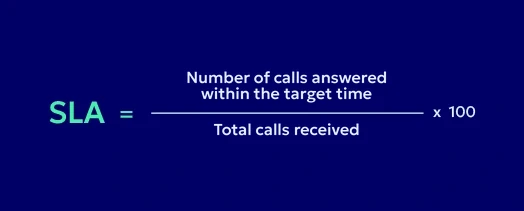
2. SLA (Service Level Agreement): Service level standard
This is a commitment defining how many seconds it takes to answer a call. In other words, it's the key metric for how fast and how well a contact center delivers service. Most contact centers target 80/20, meaning 80% of all incoming calls answered within the first 20 seconds.
Why does it matter?
Besides showing whether a contact center is keeping up with its workload, it is a key metric for evaluating agent performance.
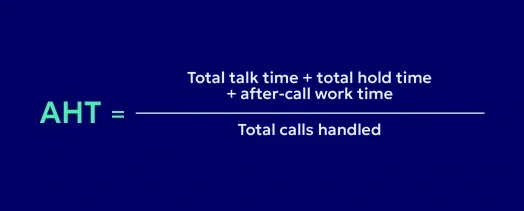
3. AHT (Average Handle Time): Average time spent per call
This metric measures the average time an agent spends resolving a customer's issue from start to finish, including talk time, hold time, and after-call work logging notes in the system. It varies by industry, but the global benchmark is 4–6 minutes.
Why does it matter?
The goal isn't to end calls as fast as possible, but to resolve issues well while reducing wait times.
4. CSAT (Customer Satisfaction Score): Customer satisfaction score
CSAT is a metric that directly measures customers' short-term satisfaction to evaluate an agent's communication and service. The message after a call asking “Please rate our service from 1 to 5” is how this metric is measured.
Why does it matter?
It enables an objective assessment of service quality and helps evaluate and improve agents' communication skills.
5. FCR (First Contact Resolution): First contact resolution rate
This metric measures whether a customer's issue was fully resolved on the first contact, without the need to call back.
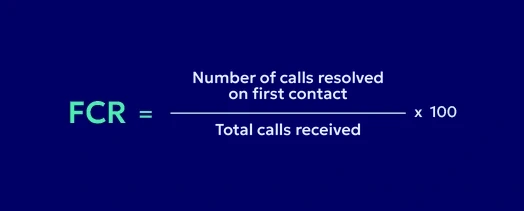
Benchmarks vary by industry, but on average it should be 65%–75%, meaning around 70% of all callers have their issue resolved on the first call.
Why does it matter?
Research shows that for every 1% increase in FCR, customer satisfaction rises by 1% and operating costs fall by 1%. So the higher this rate, the better the effect on customer satisfaction and staff workload.
6. Queue: Call queue
Just like standing in line at a supermarket or bank, this technology automatically places calls in a queue to wait when call volume spikes and all agents are busy.
Why does it matter?
Your line never returns a “busy” signal, so every call gets through. While callers wait, you can play music or share information about new products, services, and promotions.
7. Call Parking: Placing a call on hold
This is a system feature that holds a call temporarily so it can be picked up by any other agent or from any other line.
Simply put, it's like parking a car in a lot and coming back to pick it up from wherever you are.
Why does it matter?
The call is transferred straight to the right staff member without cutting off the customer or asking them to call back.
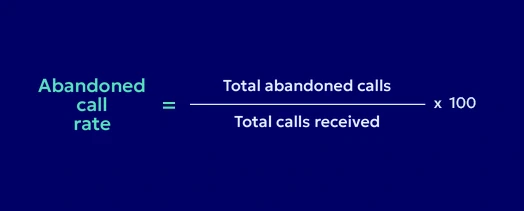
8. Abandonment Rate: Abandoned call rate
This key metric measures the share of calls where the customer hung up while waiting in the queue before reaching an agent. Internationally, an abandonment rate below 5% of all incoming calls is considered healthy.
Why does it matter?
A high rate indicates that staffing is insufficient during peak periods, or that time spent per customer is increasing and lengthening wait times for other customers.
9. Call Record: Call Recording
This technology records all inbound and outbound calls handled through the contact center in high quality and stores them securely in the system.
Most contact centers use an IVR message to remind customers before the conversation begins that "Your call is being recorded."
Why does it matter?
When a misunderstanding or dispute arises between a customer and an agent, the Call Recording becomes the key objective evidence. It is also used to evaluate and enforce contact center quality and standards.
10. QA (Quality Assurance): Quality control
Contact center QA is the process of systematically monitoring agents' communication, the accuracy of the information they give, and adherence to service standards in order to improve quality.
Typically, a team lead randomly selects call recordings, chats, and emails and scores them against a dedicated evaluation form, or checklist.
Why does it matter?
It standardizes service so that every agent delivers the same level of service, and prevents complaints and disputes.
Setting up these 10 terms and metrics in your system and making a habit of measuring and analyzing them in daily operations is the most direct path to better service quality. You can use all of these metrics and measures together through CallPro Voice, our service for business phone lines.
By implementing CallPro Voice in your contact center:
- You can answer every incoming call.
- Distribute call volume based on your headcount and business needs, and reduce wait times.
- View call recordings, reports, and analytics in real time, and improve key metrics such as QA, SLA, AHT, and CSAT.
Fill out the form below to get free advice from our experts on the right solution for your organization.