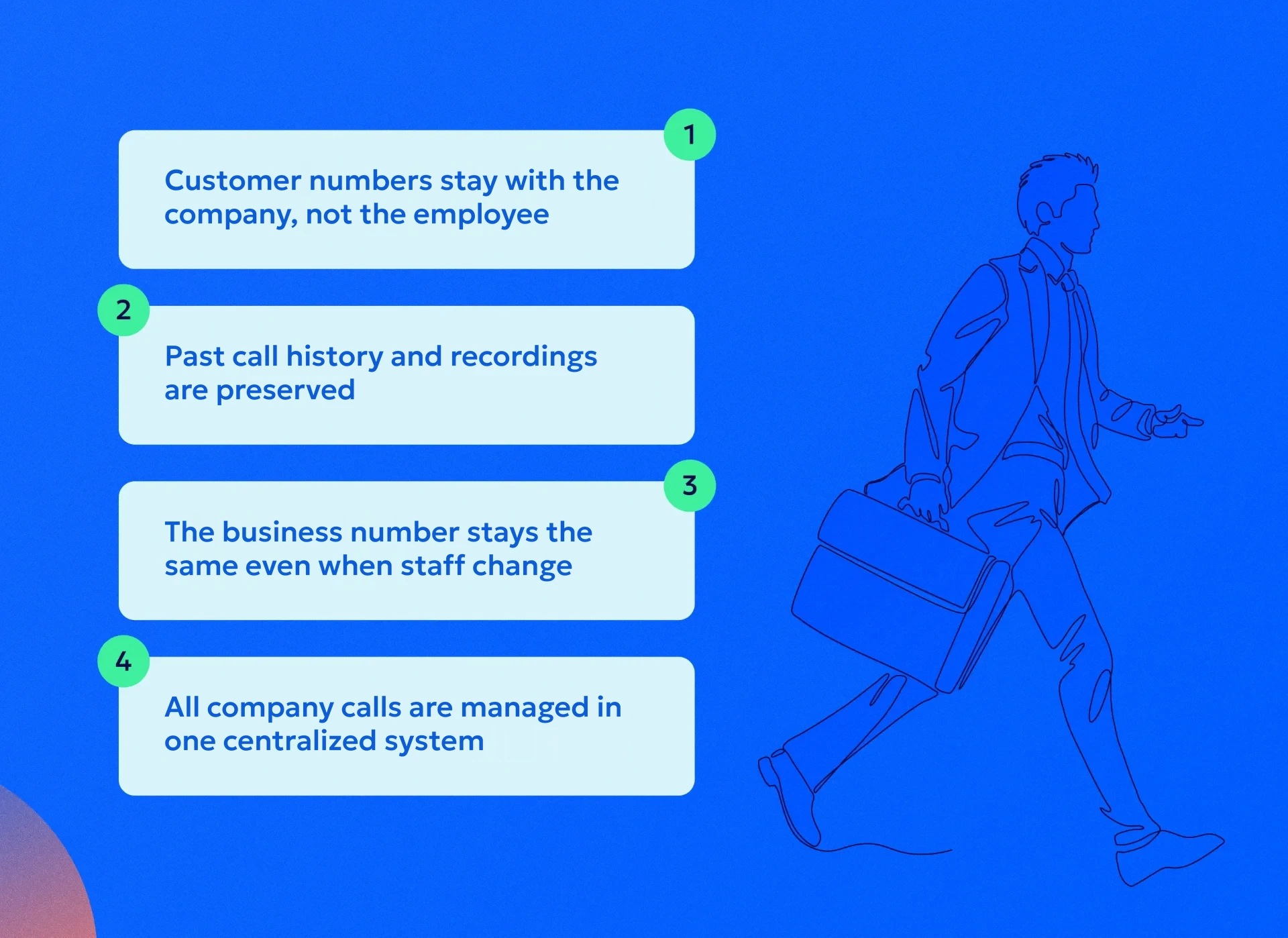
When an employee leaves, it's not just their desk that goes empty. The customers they've worked with for months, their call history, and sometimes even the company's phone number are at risk of disappearing with them.
When an employee leaves, the problem of the phone number they used stays with the organization. Especially if customers regularly use that number, extra work arises—briefing the new employee and giving customers a new number.
For example, a sales manager at one company had been using their personal number to communicate with clients for two years. Quotes, orders, contract terms, meeting schedules: all daily communication ran through that number. Then one day they left the company, and clients kept calling that same number. Some didn't know the employee had left, while others wanted to continue earlier conversations. Meanwhile, the new employee had no information about previous calls. This raises a simple question.
What happens to your customers when an employee leaves?
If your business number depends directly on one employee's mobile phone, SIM card, or personal use, customer relationships risk being cut off every time staff changes. It's a different story when business calls are managed through a centralized system. With CallPro's service for business employees, you can use your business number independently of any single employee.
Today, businesses use systems for customer data, sales history, and communication. Yet the phone number—one of the most common communication channels—is often left tied to employees' personal use. If the number changes every time an employee changes, customers get confused and have to reconnect with the organization.
CallPro Teams offers you the following benefits.
1. Unify business and employee numbers
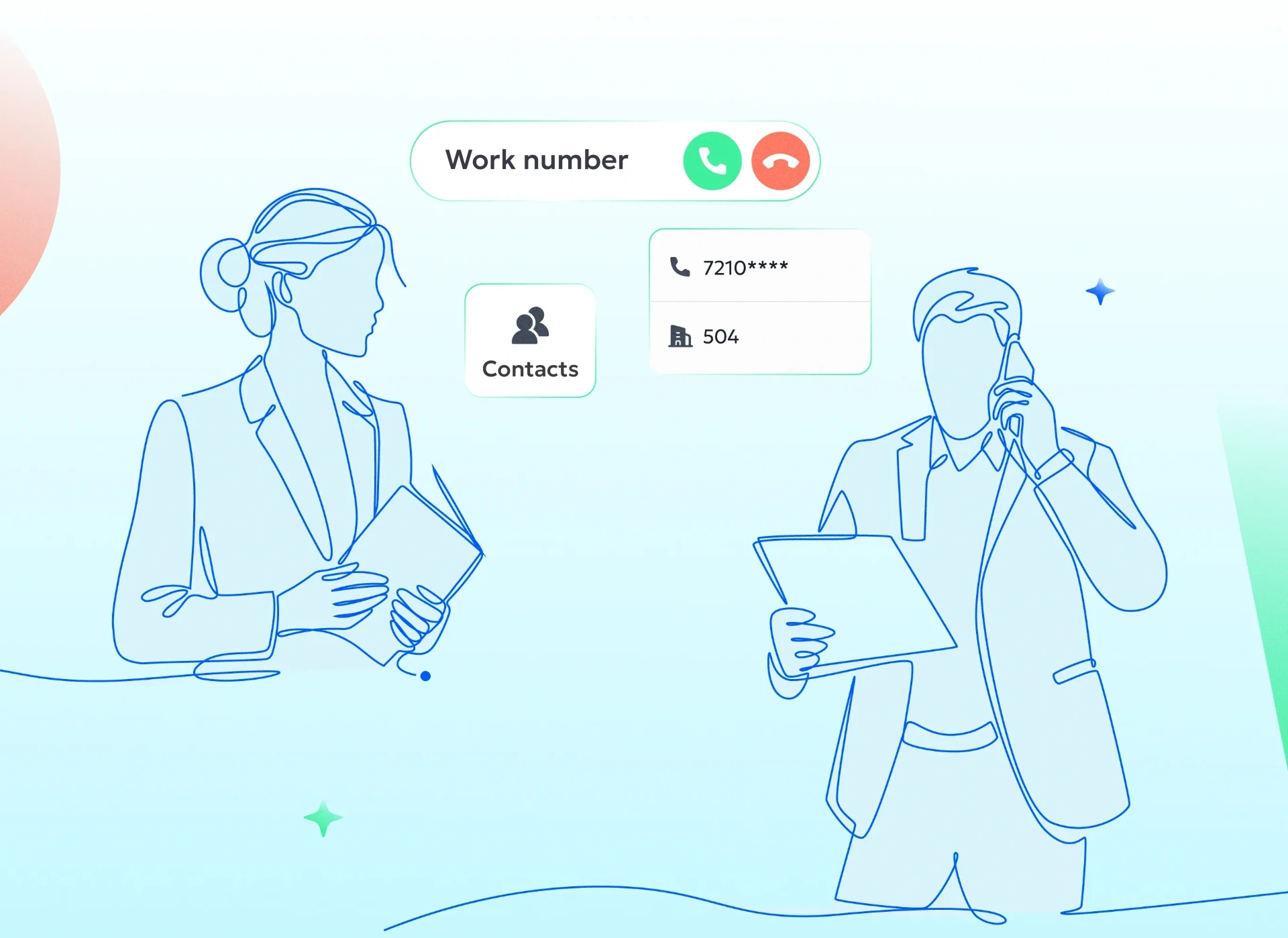
Consolidate your main business number and the numbers your employees use into one system and centralize your communications.
Employees can answer business calls on their mobile phones and call customers from the business number. That way, employees can communicate using the business number from wherever you are, and customer calls are never dropped. Phone communication is also stored in one system, independent of individual employees.
Because the business number belongs to the organization rather than the employee, the number stays the same even when staff changes. New employees can also see the previous communication history and continue serving customers without interruption.
2. Store call history and details
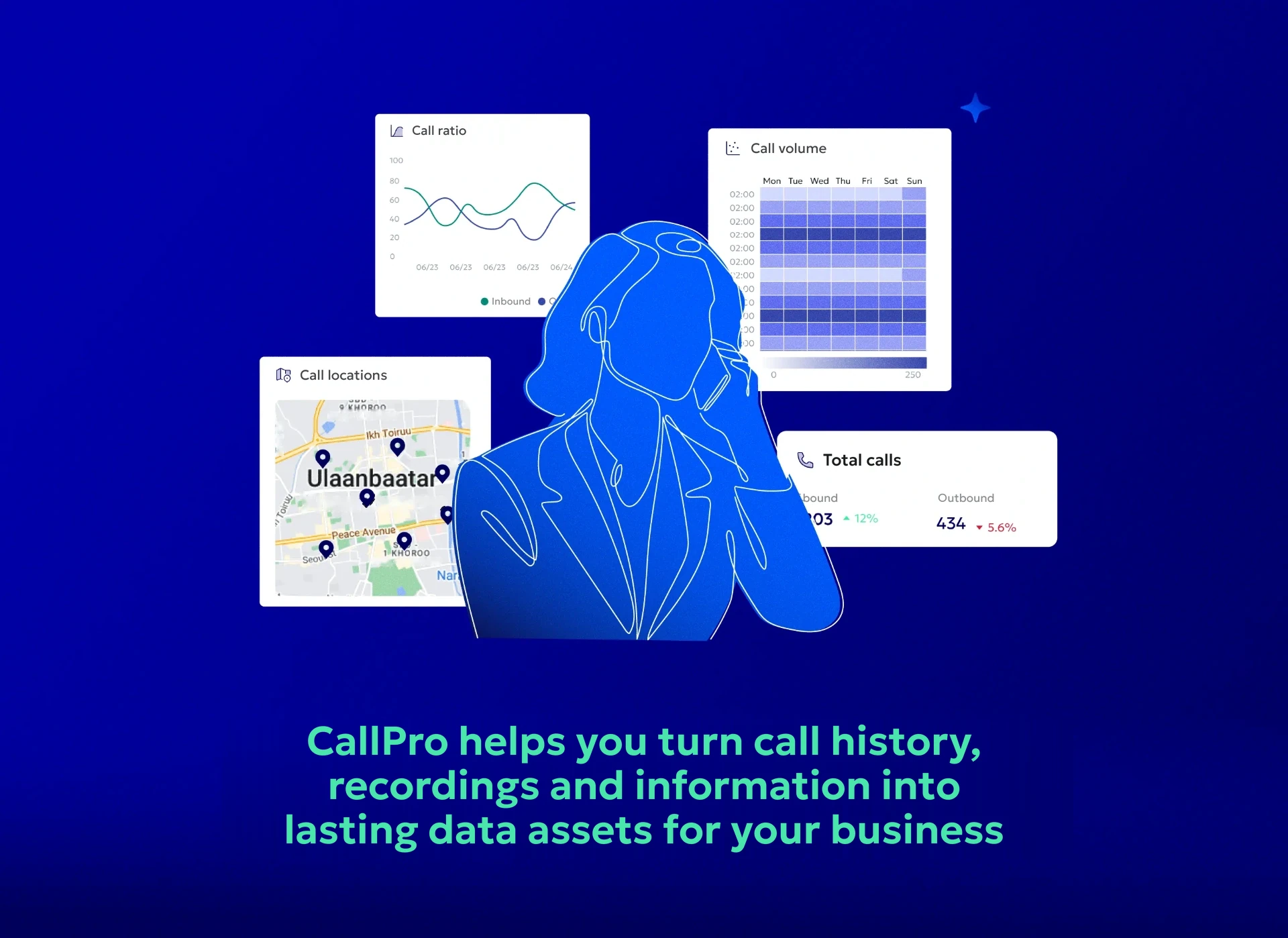
The organization stores contacts and call history centrally in the system, independent of employees. You can also track call details such as call location and call recordings.
It creates a reliable, secure environment for transmitting business information and employee communications such as messages and calls.
3. Call forwarding
When an employee has left, is sick, or is on vacation, calls to their number can be routed to currently active employees. Calls to that number are routed to an employee, team, or department according to configured rules, and when an employee is replaced, calls are forwarded directly to the new employee. This way, the business number doesn't change and customers don't have to call a different number. The number your customers know stays active.
You can also transfer a live conversation directly to another employee.
4. Measure usage and performance
Easily review reports on employees' inbound and outbound calls and messages in one place. See exactly how many calls were received and how many messages were sent. This lets employees monitor their workload and manage their performance more effectively.
Staff turnover is a normal part of business. But having to get acquainted with customers all over again every time an employee changes is a loss for the organization. That's why it's important that the business phone number is company property, separate from employees' personal numbers, and that information is retained regardless of who is working.
Let us help you keep your business number as a data asset of your organization.